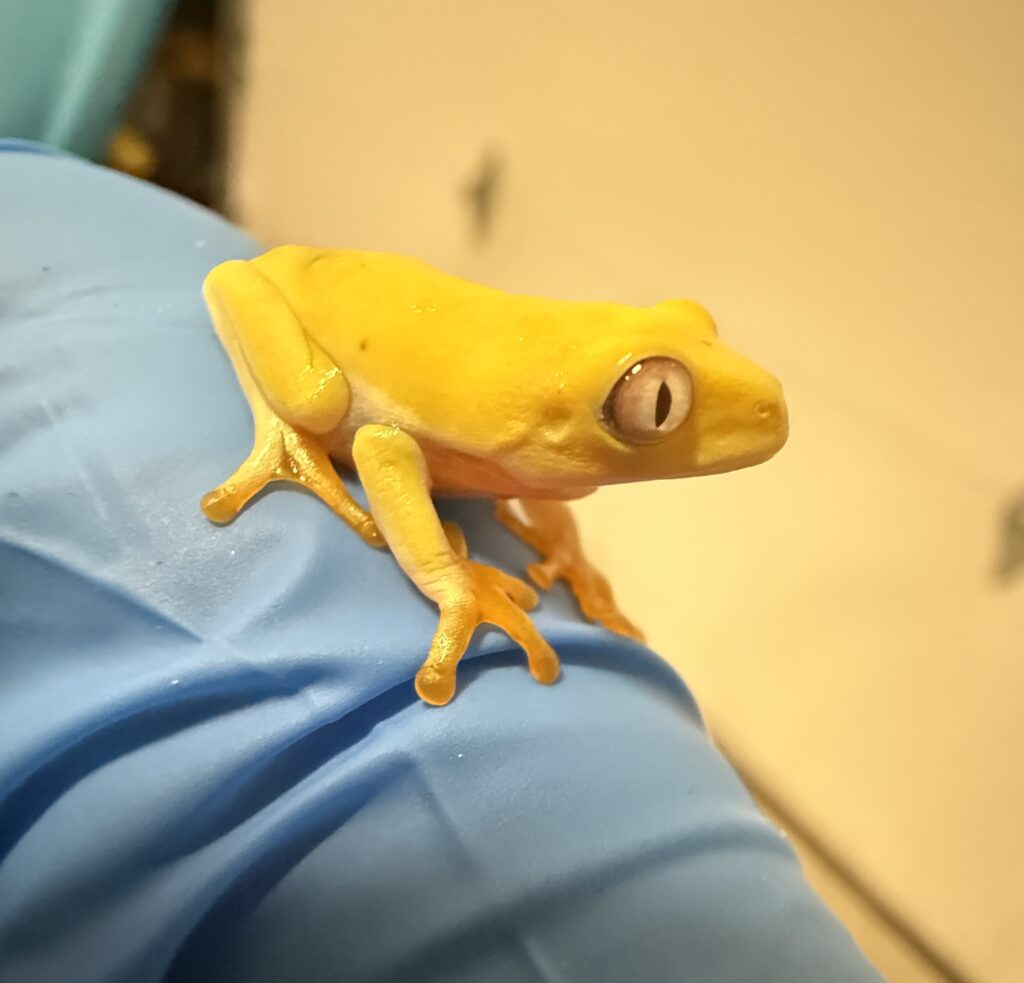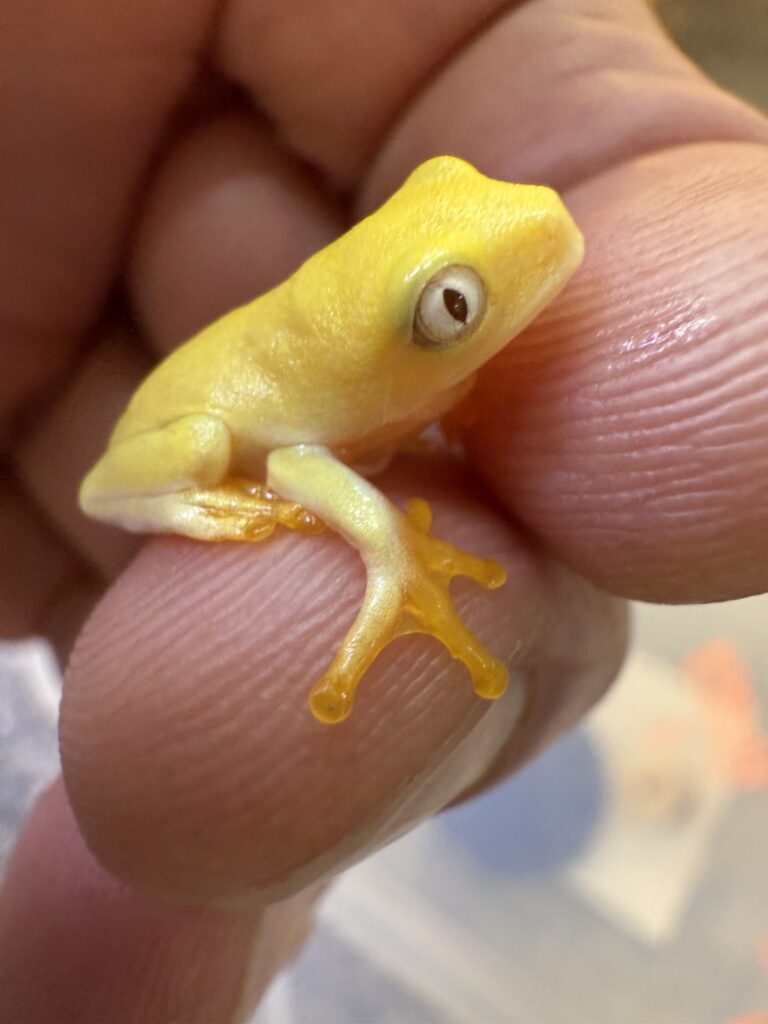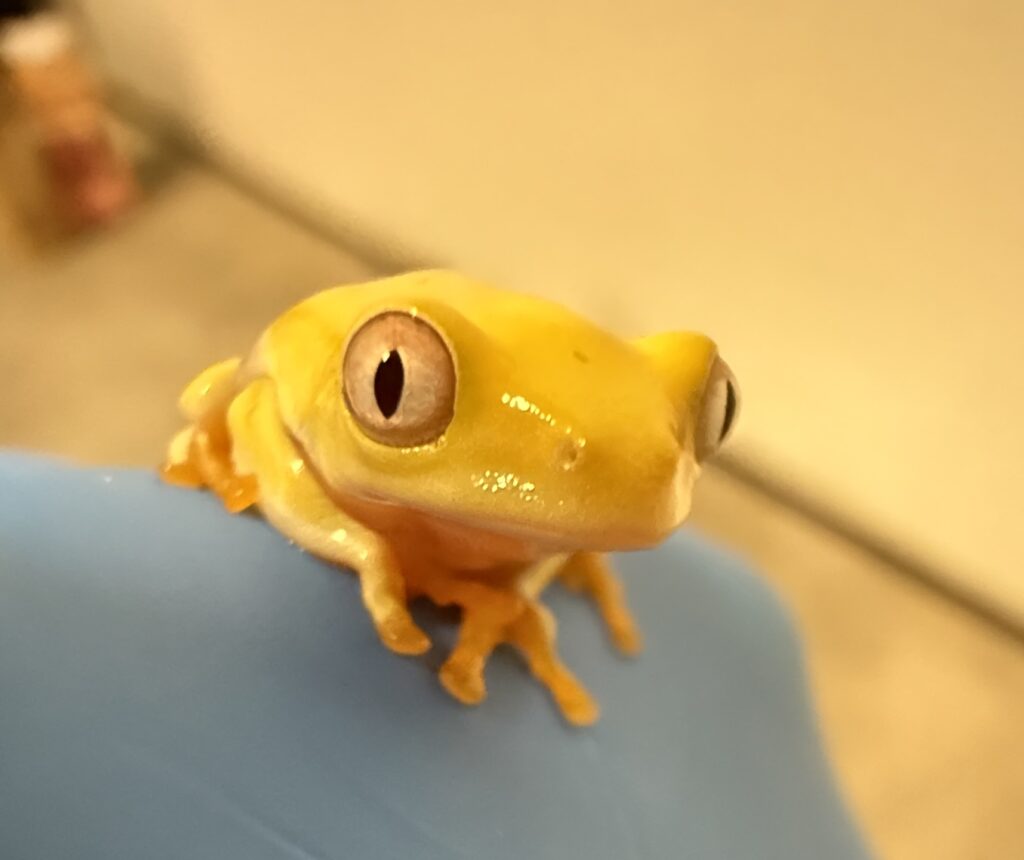

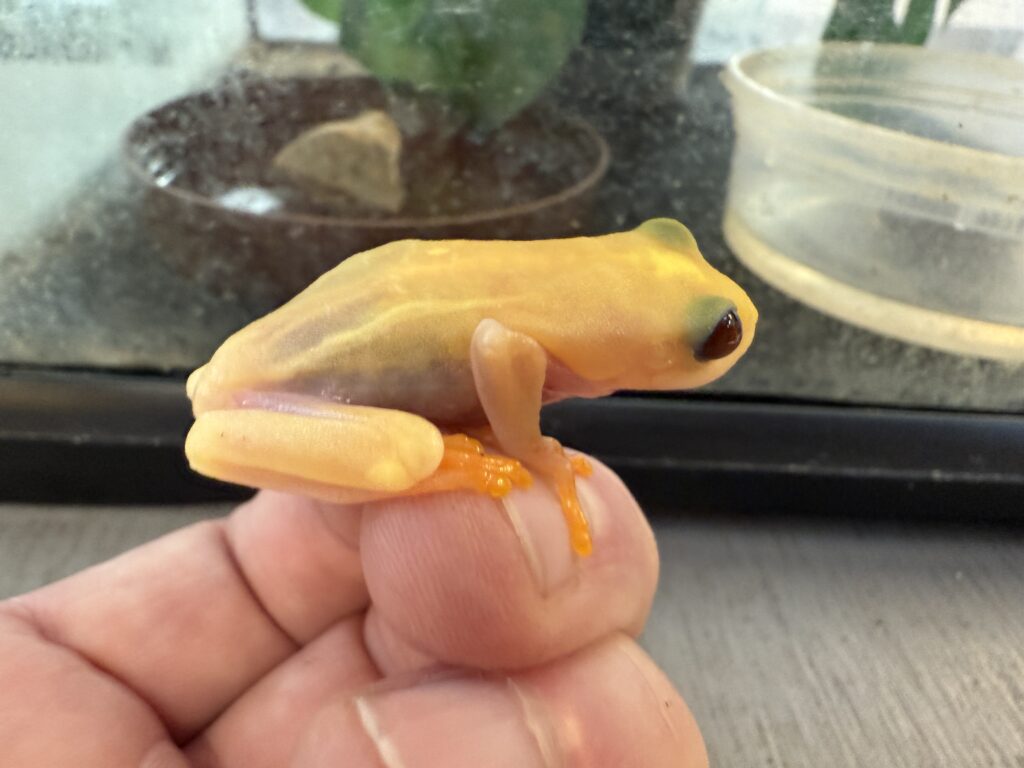
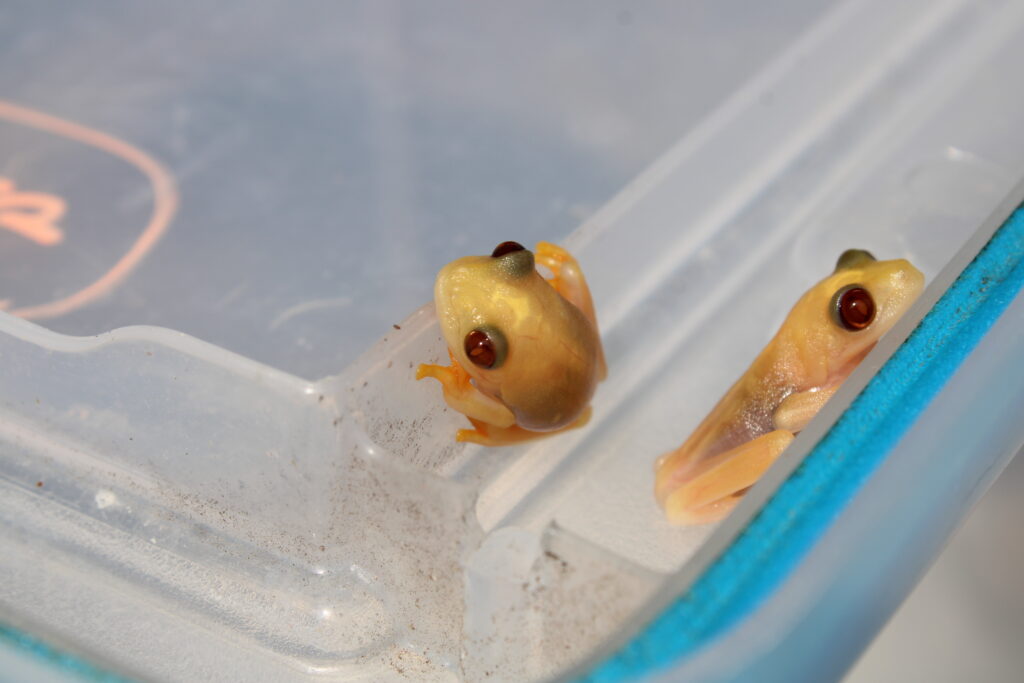
Just in time for tea season, our Transparent Honey-Colored RETFs are out of the water!
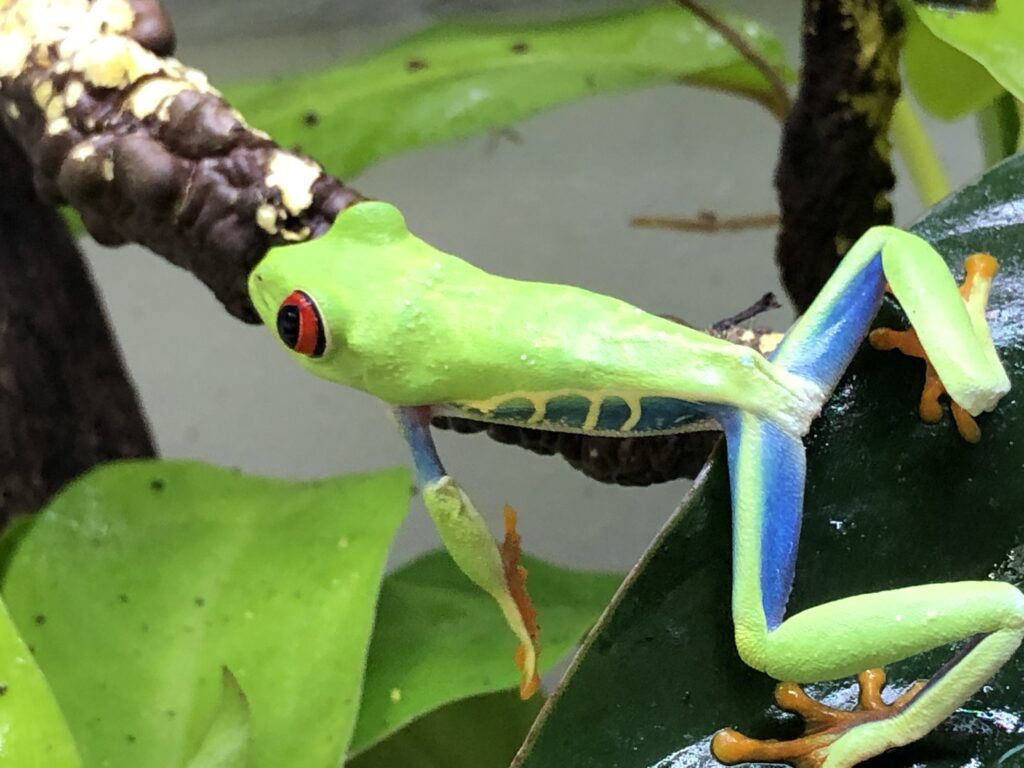
When people see pictures of animals in the rainforest, they often see the “poster child” red-eyed tree frog. It is a beautiful green frog, with bright red eyes, orange toes, and deep blue stripes along its sides.
A number of years ago, some of these frogs were imported to the US and included a handful with very rare skin color types: The albino type has a lack of the dark pigment melanin. The burgundy type has an excess of the dark pigment melanin. Fortunately, these special frogs found their way to people like us that are interested in breeding them and working to uncover the biological Punnett Square of dominant and recessive genetic traits!
In a nutshell -We now have several transparent-honey-colored red eyed tree frogs! We are very excited about this, as we are not aware of this rare color combination appearing in captivity anywhere in the frog world! Glass frogs are known for their transparency, but red eyed tree frogs are a completely different genus and species of frog that is normally completely opaque! A wonderful plus, they are turning out to be just as hardy as the regular green wild-type frogs!
We also have some yellow colored frogs coming out – “lemon RETFs.” (Our frog hobbyist friend Mike Novy of RainforestJunkys has bred a “pink bubblegum” transparent color type).
Like the crossbreeding of color morphs of ball python snakes that came into the pet trade in the 1990’s, a technique (as long as they seem to remain very hardy) is to breed these different skin color types together through 2 generations, to see if other recessive skin color genes might pair up and therefore appear in the offspring. Unlike mammals that may have increases in birth defects from such inbreeding, it is thought that reptiles and amphibians evolved to “get the kinks out” for the most part long, long ago. As a result, birth defects are rare. We are in the process of compiling genetics Punnett Square data with more details as this project progresses.
Included in the offspring we have:
· A few wild-type green colored froglets
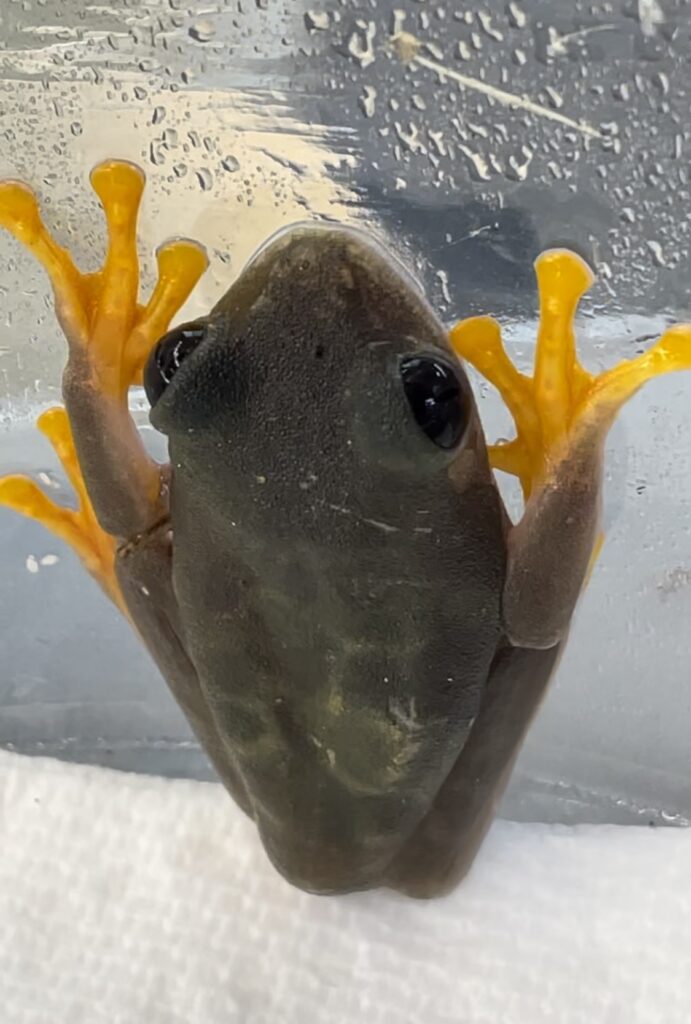
· Several plum colored siblings, with some of them having partially transparent ventral (belly) coloring!
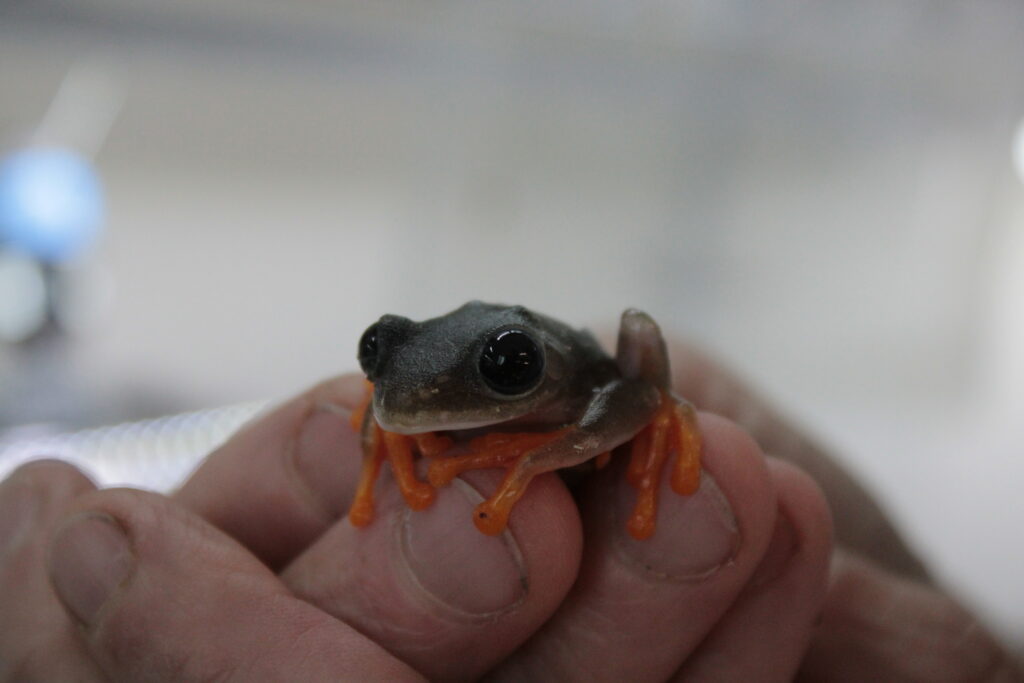
· Several honey-colored siblings, with most of them having highly transparent skin! We can even see their internal organs and the heart beating in many of these offspring! As they mature, we can watch the calcium accumulating in their bones as the froglet cartilage turns into solid bone! It is like doing a frog dissection without any cutting necessary!
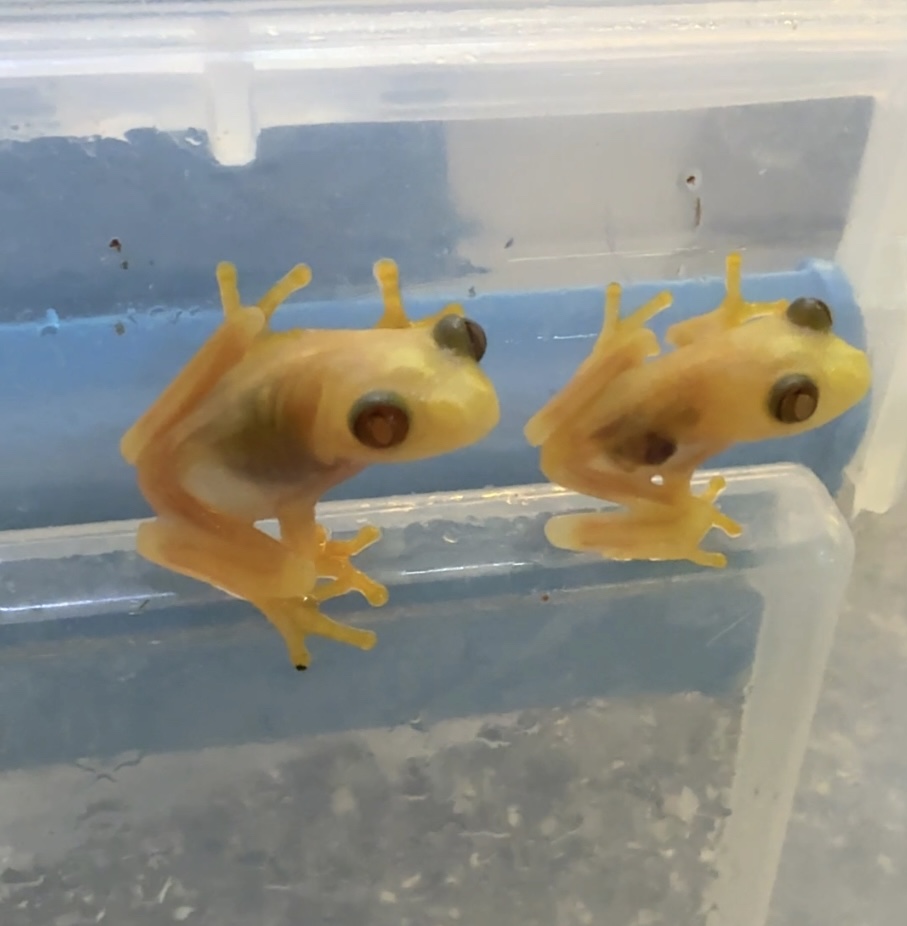
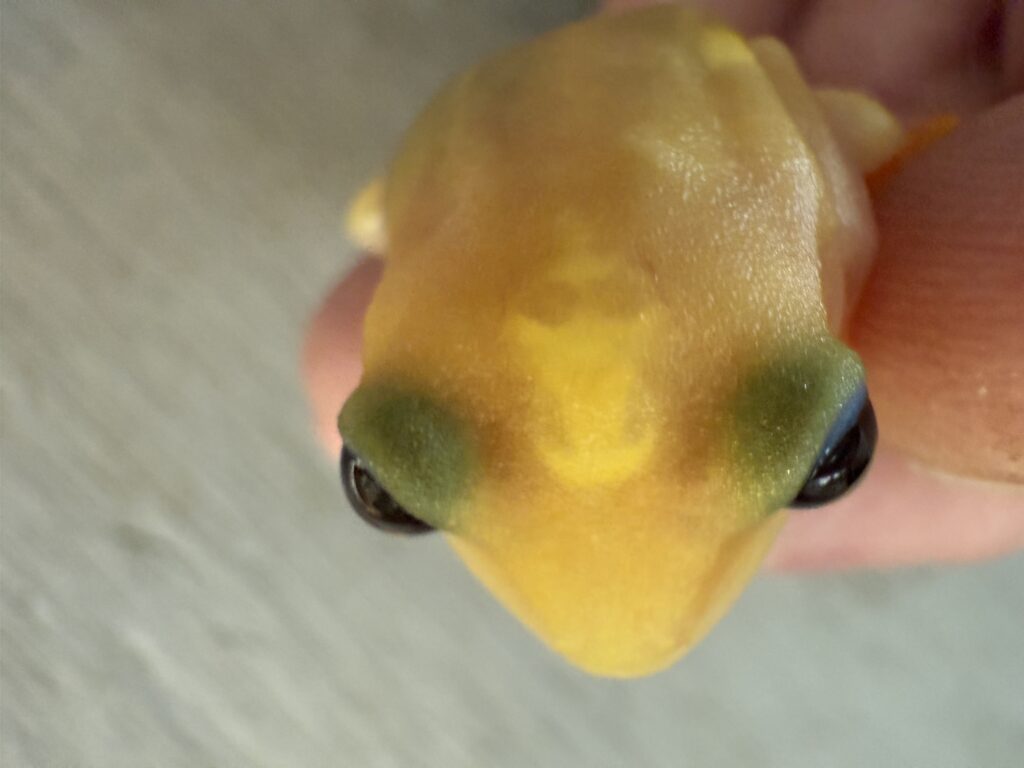
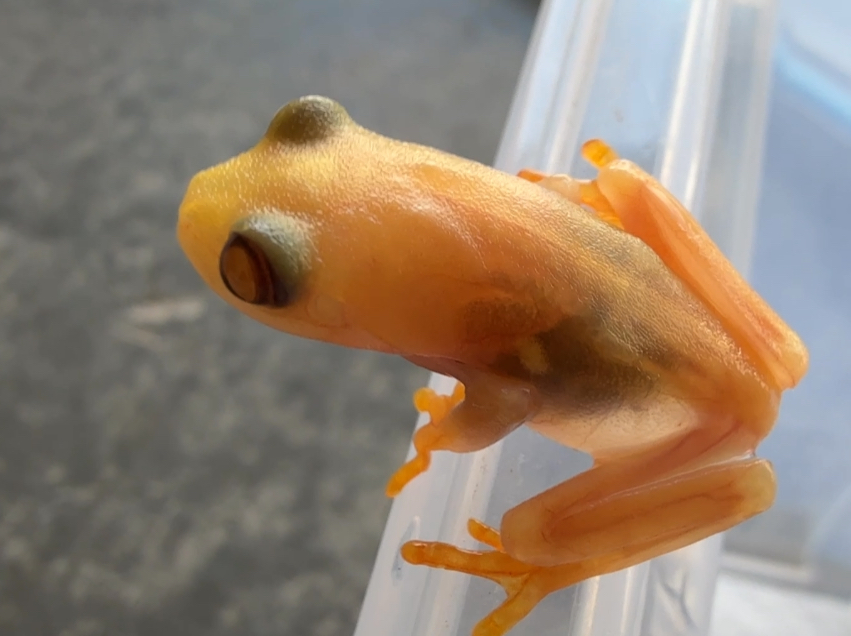
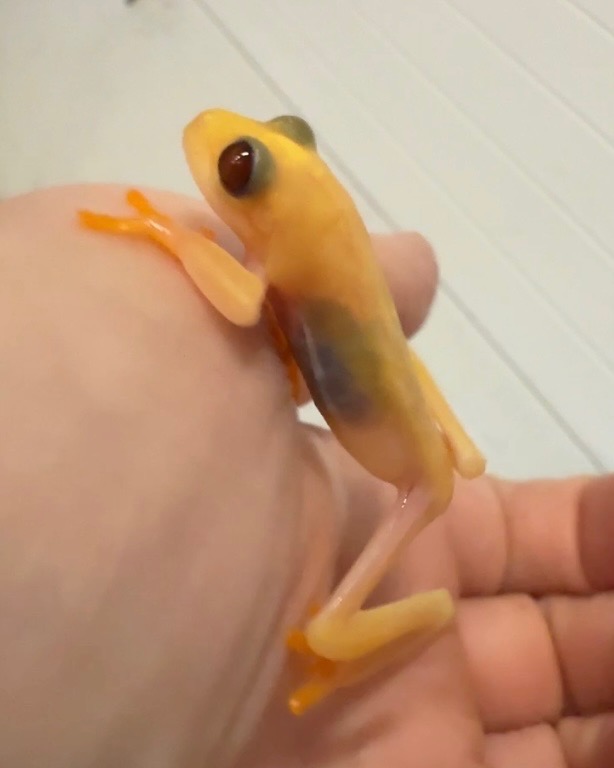
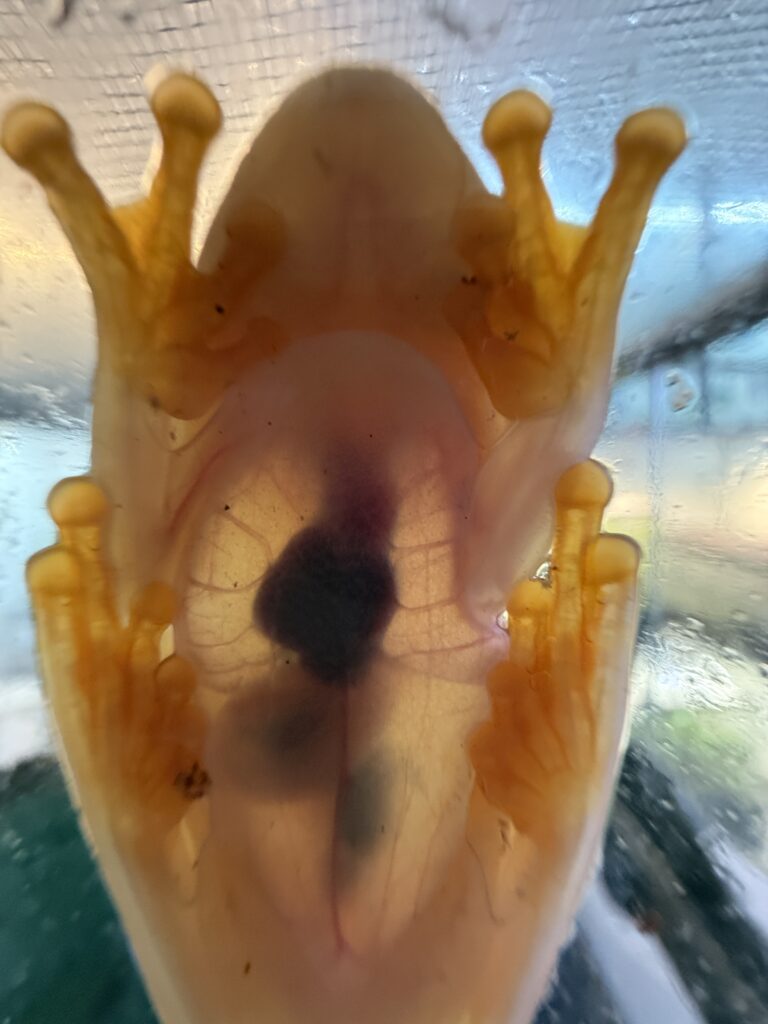
· We even have two of these “lemon” colored frogs coming out of the water as well, stay tuned to see how they morph and develop as they mature.